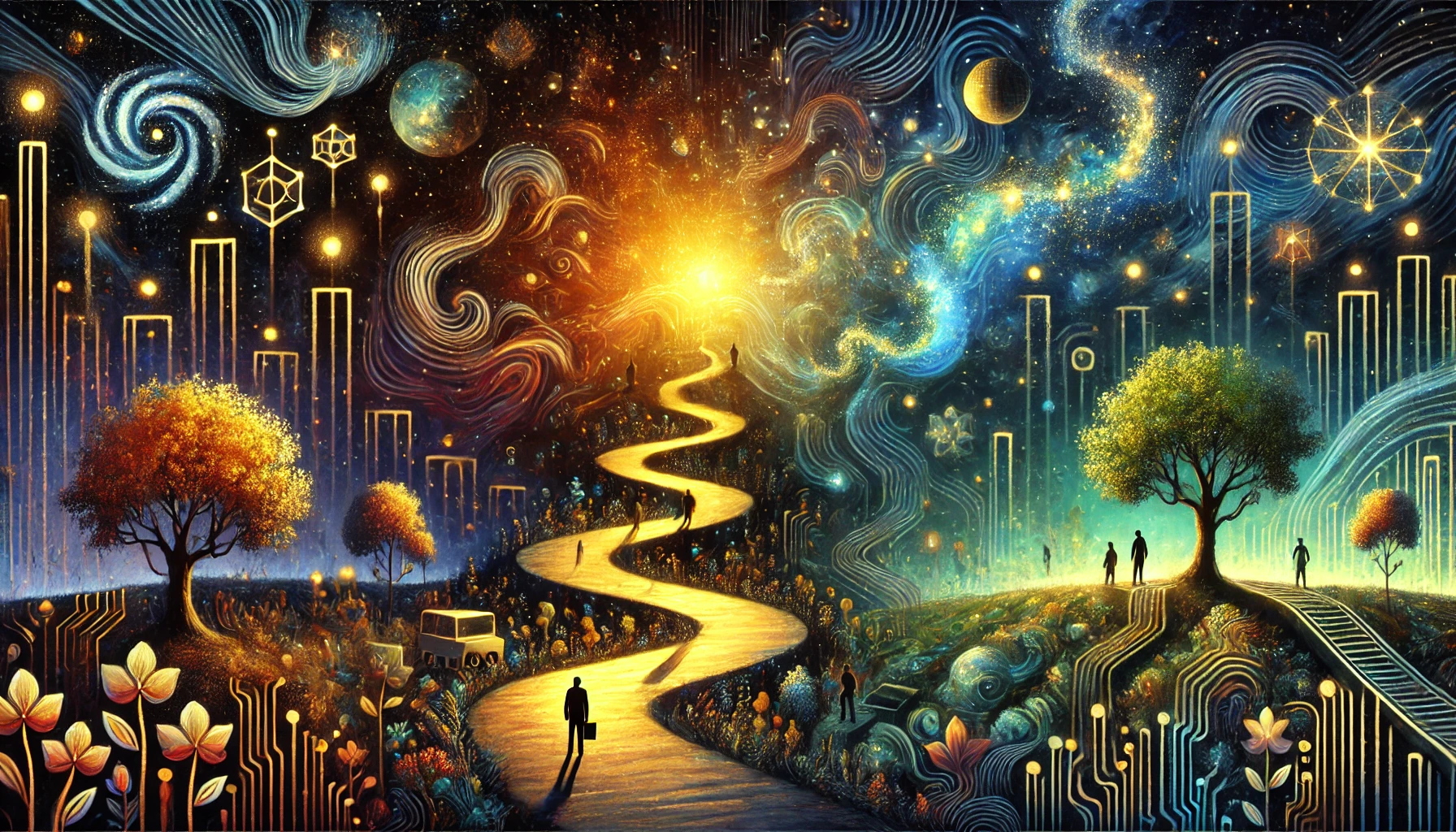
We live in a world where everything is possible and nothing feels enough. Where options spill over from our screens into our minds, where even small decisions feel strangely heavy. We scroll through a hundred versions of what could be, only to wonder if the life we’ve chosen is somehow less than the one we didn’t. And in that wondering, in the afterglow of possibility, something quietly slips away – our ability to enjoy what is.
Too many choices don’t just overwhelm our minds. They quietly disorient our sense of satisfaction. It’s not that we regret what we picked. It’s that we can’t stop thinking about what we didn’t.
There’s a strange paradox here. More options were supposed to make us happier, freer, more fulfilled. But the rise of choice has coincided with the fall of contentment. Psychologist Barry Schwartz calls it the paradox of choice – the more choices we have, the more likely we are to feel regret, self-doubt, and decision fatigue. We don’t just want to make a good choice. We want to make the best one. And when we inevitably don’t know if we did, the joy of choosing evaporates into the fog of comparison.
It’s easy to see this in the small things: restaurant menus, Netflix shows, which phone to buy. But the deeper impact is in how we now live with chronic dissatisfaction even when nothing is wrong. Because when life is good, we still wonder: could it have been better?
And this isn’t just personal. It’s cultural. We’re being trained to optimize everything – productivity, relationships, weekends, even sleep. Self-help promises a better version of everything. Algorithms recommend endlessly. Advice floods in. We’re constantly aware that there’s another tool, another career, another partner, another place, another way to live that might be just slightly more fulfilling than the one we have.
But at what cost?
We’ve lost the stillness of presence. The peace of enough. The deep comfort of choosing a path and walking it without needing to keep checking if the other one had a better view.
What no one tells us is that every choice – even the right one – comes with the death of a thousand other lives we’ll never live. And that’s not a flaw in the system. That’s just life.
There’s a Japanese concept called “mono no aware” – the gentle, bittersweet awareness of the passing of things. It invites us to feel beauty not in endless possibility, but in the fleeting, irreplaceable nature of the present. It suggests that meaning is not found in maximizing but in noticing. That joy is not in choosing everything, but in cherishing something.
We need to learn how to choose again. Not perfectly. Just honestly. Choose a city. Choose a path. Choose a partner. Choose a rhythm of life. And then stop looking sideways.
This isn’t an argument for complacency. It’s a case for peace. For understanding that the richness of life isn’t in what’s available – it’s in what’s experienced. That joy doesn’t grow in the fields of “what if.” It takes root in the soil of “what is.”
And yes, we may always feel the soft echo of the road not taken. That afterglow will come. But it doesn’t need to haunt us. It can remind us – gently, beautifully – that we were lucky enough to live in a time of infinite choice, and wise enough to love what we picked.
Because maybe the most radical act today is not searching for something better. It’s deciding to find wonder in what’s already here.