Last night, I found myself deep in conversation with a dear friend, one of those meandering dialogues that starts with casual reflection and spirals, before you know it, into something far more revealing.
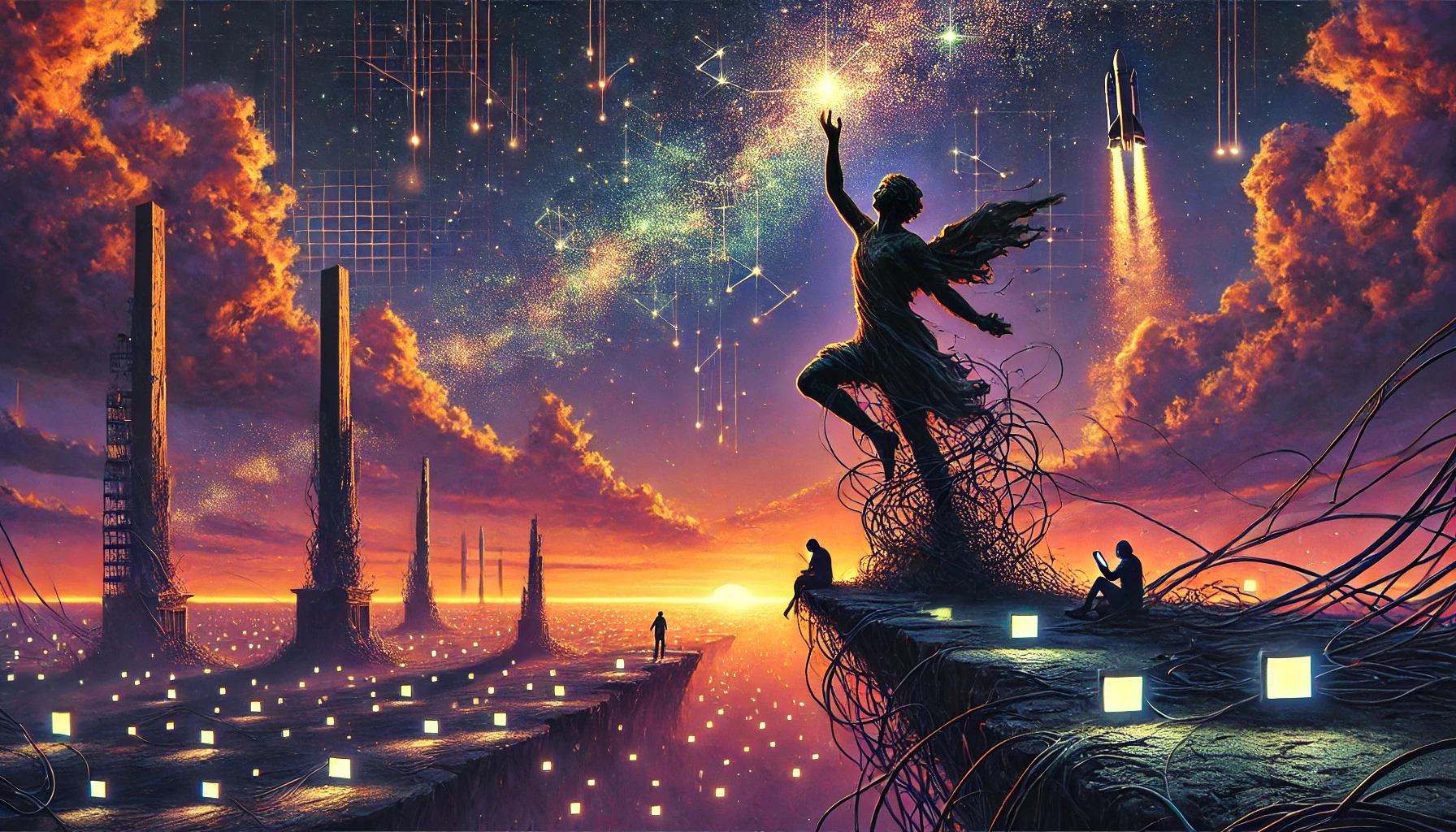
We were talking about the world around us, but not in the way headlines do. He was lamenting the quiet disappearance of something vital – a shared willingness to chase moonshots. The bold ones. The ideas so big and unreasonable that they once required entire nations to believe in them. Somewhere along the way, he argued, we stopped building for the stars and started building for the scroll.
And it stuck with me.
Because, even I remember, there was a time when ambition looked different. It wasn’t about virality. It wasn’t about personal branding or the right lighting setup. It was a collective force. A kind of social propulsion. Audacity wasn’t a marketing strategy – it was a moral one. The goal wasn’t to be seen. The goal was to do something that mattered, something impossible, something that might fail publicly and spectacularly – but was worth trying anyway.
Today, the world looks like it’s bursting with creativity, yet, in my humble opinion, curiously empty of long-term courage. Our timelines are crowded with content, our feeds with flair, but the imagination feels strangely outsourced. The algorithm now curates our culture. It decides what deserves attention. And increasingly, what it rewards is not vision, but volume. Not insight, but interruption.
We’ve created an economy that largely feeds off attention but starves the mind. One that often treats curiosity like a trend, depth like a burden, and effort like a punchline. The people who build quietly, persist patiently, and think rigorously are often outshouted by those who entertain casually and publish compulsively. Charisma now routinely outpaces competence. Form dwarfs function. The public square has turned into a performance stage – and we’re all auditioning.
None of this is to vilify creators.
On the contrary, the act of putting yourself out there in today’s climate requires immense courage. The pressure is real. The burnout is real. And the hunger for connection, for recognition, for validation – it’s all heartbreakingly human. But we must also recognize the ecosystem we’ve built around it. The machinery that rewards the spectacle and punishes the slow burn. The system that makes sincerity look outdated and makes monetization the new morality.
I would contend that it wasn’t always like this.
There was a time, and I say this from personal experience, when people were celebrated not for how many followers they had, but for the sheer size of their ideas. For the risks they embraced. For the futures they dared to imagine. It wasn’t perfect, but at least it was pointed somewhere. Today, I can’t help but feel that far too many are building with their backs to the future, shaping their efforts for today’s applause instead of tomorrow’s legacy.
The hardest hit, perhaps, are the quiet overachievers. The ones who did what they were told, invested in deep expertise, followed the rules, and believed in the old promises. Now they’re watching from the sidelines as digital fame outpaces formal expertise, and as viral moments displace hard-earned mastery. Their skills often don’t trend. Their depth doesn’t always scale. Their discipline isn’t easily shareable. And so they question themselves, question their place, and question whether the world still values what they spent their lives becoming.
Meanwhile, the consumers – the rest of us – are caught in another spiral. We tell ourselves we’re watching for entertainment, for ideas, for news. But more often than not, we’re also watching to imagine ourselves in that spotlight. We watch those who seem to have cracked the code, who’ve turned personal moments into monetized momentum. And slowly, subconsciously, we begin to reshape our own aspirations. Not toward contribution, but toward visibility. Not toward mastery, but toward monetization.
And who among us hasn’t, even briefly, seen something go viral and thought – that’s cool, I could have done that, I could have been that reel?
It’s easy to be cynical.
To say this is what people want. That the market is simply giving us what we’re asking for. But that’s a poor excuse for not asking more of ourselves, and of each other. A culture is not just what is produced – it’s what we choose to elevate. And somewhere along the way, we’ve lowered the ceiling. We’ve mistaken dopamine for inspiration. And in the process, we’ve stopped asking: what are we building toward?
I believe there’s a quiet cost to all of this. A fraying of meaning. A thinning of depth. A dull ache in the background of modern life that tells us something essential is missing, even if we can’t name it. We scroll endlessly, we consume constantly, but rarely do we feel nourished. Because somewhere inside, we know we were meant to build cathedrals – not chase clout.
This isn’t a nostalgic plea for a return to the past.
The world has changed. Access has expanded. Barriers have fallen. And yes, new forms of creativity have emerged that are wildly beautiful and deeply democratic. But even in this new world, we must ask: where is the place for moonshots? For long games? For unreasonable ideas pursued with unreasonable persistence?
Because while it’s true that one viral clip can change your life, it’s also true that some of the most important ideas take years to mature. That real transformation rarely fits into thirty seconds. That systems worth changing require more than shares and likes – they require sustained effort, real knowledge, collective courage.
So maybe the challenge of our time is not to reject the creator age, but to rebalance it. To reward not just what’s visible, but what’s valuable. To build platforms that promote substance, not just spectacle. To choose to be audiences for the thoughtful, not just the flashy.
And above all, to remember that ambition, at its best, is not about being seen – it’s about building something that others can stand on. Something that outlives us. Something that whispers to the future that we were here, and we didn’t just perform – we dared. Individually, yes. But also together.