There’s a deceptively simple quote that’s floated through parenting circles for years, often uncredited, shared over coffee tables and in quiet conversations between grandparents and young parents alike:
“If you raise your kids well, you get to spoil your grandkids. If you spoil your kids, you raise your grandkids.”
It’s sharp in its clarity. It captures, in just two sentences, what many multi-generational households know to be true – not as theory, but as experience.
Discipline is never optional. It’s just deferred.
But look closer, and you’ll see that this quote isn’t just about parenting. It’s a mirror to the world we live in. It’s about legacy. And it’s about the quiet, consistent truth that every decision we avoid today is a burden we shift forward. Whether in how we raise our children, how we lead our organizations, or how we treat the planet, someone will always bear the consequences of our choices – or our neglect.
We’ve grown used to compartmentalizing consequences. As if they are detachable from the present. As if we can get away with skipping the hard parts – avoiding friction, ignoring warning signs, indulging what feels good now – and trust that somehow, the invoice won’t find its way back to us. Or worse, we assume that it will be someone else’s problem. The next CEO. The next government. The next generation.
That’s the real weight behind that quote. The idea that choices, when not carried with responsibility, don’t vanish. They reappear, later, with interest. And they knock on someone’s door eventually.
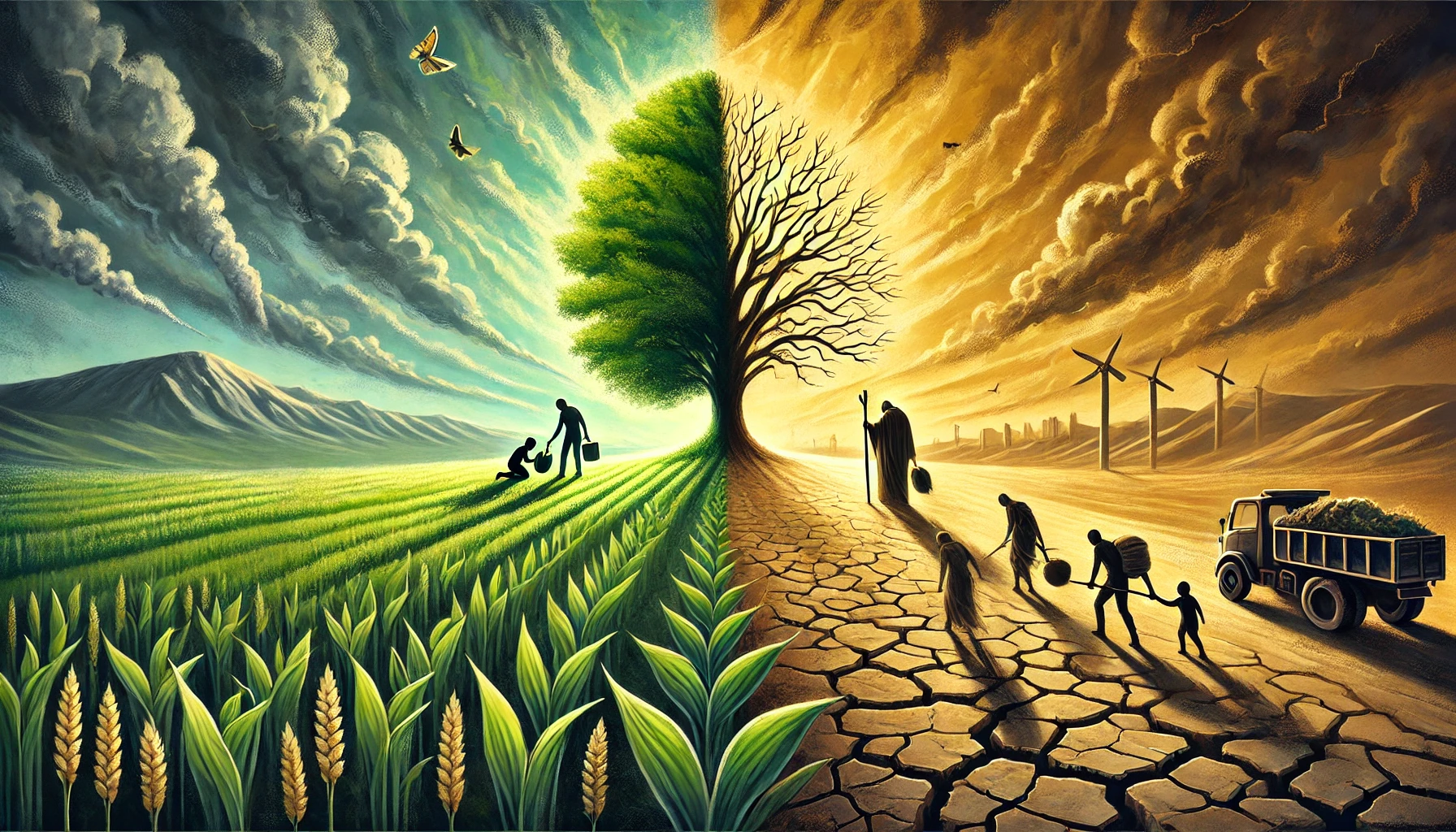
Take climate change. It’s perhaps the most sobering version of this truth. We know – scientifically, generationally, viscerally – that the path we are on is unsustainable. But mitigation requires sacrifice, patience, and an appetite for the invisible win. We have to make choices today for futures we won’t get to live in. And that’s not an easy ask. But that’s what stewardship is. It’s about making decisions not because they are comfortable, but because they are right.
The same applies to leadership. Many of us have worked in or led organizations where urgent short-term wins are prioritized over long-term viability. The metrics look great until they don’t. The culture feels shiny until it cracks. And by the time someone realizes that the foundation was compromised, the leader who made those calls is often long gone. It’s the next leader, and the team behind them, who have to pay the bill.
You could apply this to systems too – economic, social, institutional. So much of what we inherit is not what people built with intention, but what they avoided. What they tolerated. What they passed on quietly, hoping time would fix what time cannot fix without action.
This is why I keep coming back to the above quote. Because it doesn’t just speak to parenting or generational wisdom. It speaks to accountability in its purest form. You can apply it to your health. Your finances. Your community. Your workplace culture. Your nation. Your carbon footprint. Your unresolved past.
Either you face the discomfort now, or someone else will later. Either you sow with care, or someone you love will harvest the weeds.
This isn’t about guilt. It’s about choice. Because while we don’t always get to control the world we inherit, we absolutely shape the one we leave behind.
And we all like to think we care about the future. But caring is not a sentiment. It’s a practice. It’s a series of decisions that say, “I will carry what’s mine now, so someone else doesn’t have to carry the consequences later.”
It’s easy to say the future matters. It’s harder to act like it does.
That’s the truth behind the quote: no generation gets to opt out of responsibility. You can delay it. You can disguise it. But you don’t get to escape it.
Because someone always pays the price.
The only real question is – who do you expect it to be?