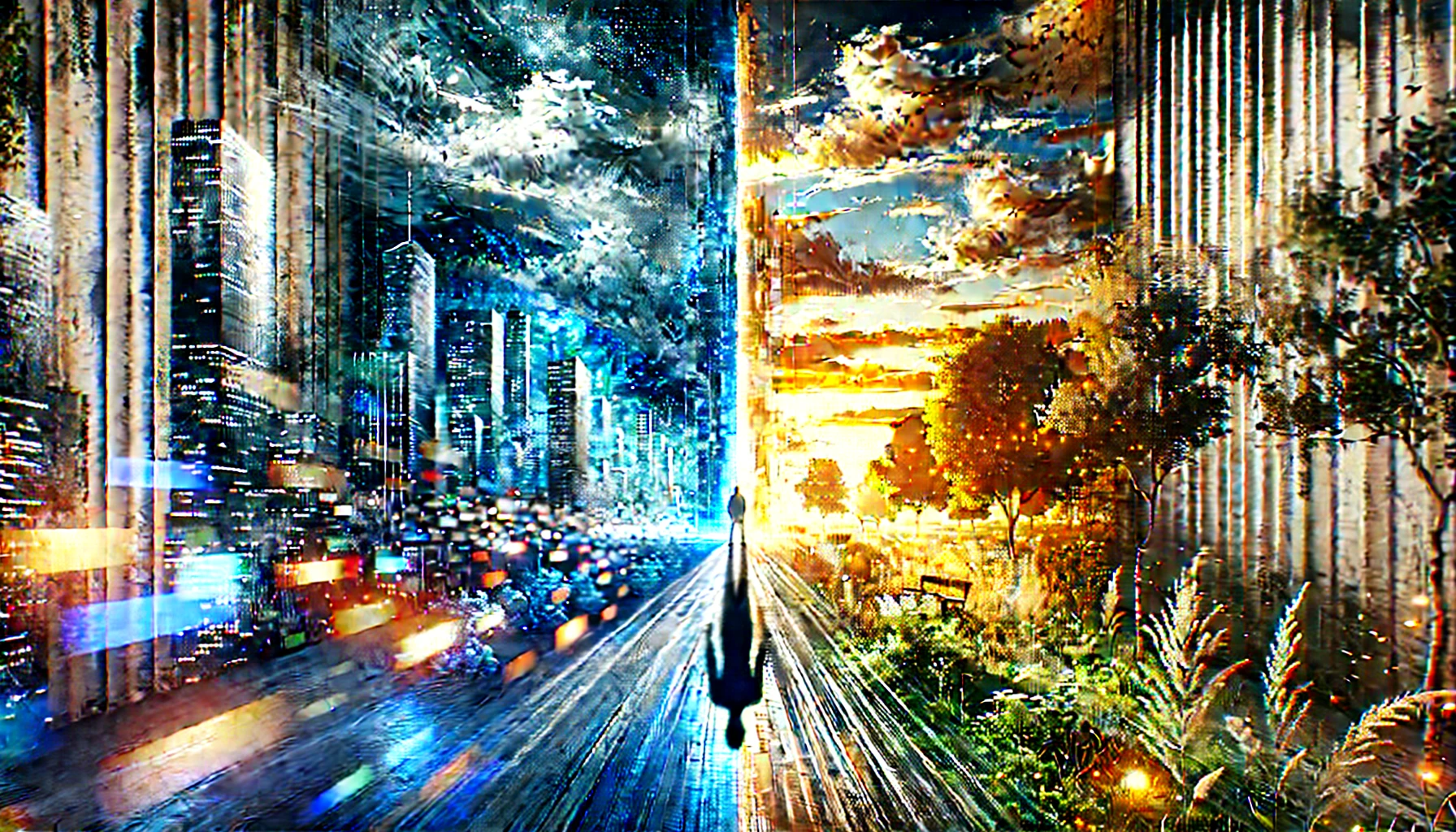
We are constantly reminded not to drive while distracted.
It’s a public safety issue, a legal concern, and, more than anything, a matter of protecting life – ours and others. The warnings are loud, the consequences are clear, and the guidance is non-negotiable. A split-second mistake behind the wheel can alter the course of many lives, sometimes irreversibly. That’s why we’ve built entire systems to reinforce this wisdom: campaigns, laws, penalties. We’ve come to accept that no text message is worth a life, no glance away is worth a disaster. And yet, I can’t help but wonder – why doesn’t this same principle apply to the way we live?
Why is distracted driving unacceptable, but distracted living so widely allowed?
It’s curious, isn’t it? In the car, we are laser-focused on the cost of inattention, but in life, we let the minutes, the days, the years slip by in a haze of autopilot, half-presence, and mindless scrolling. We are taught to fear the accident, but rarely are we taught to fear the slow erosion of a life unlived.
Maybe it’s because the consequences of distracted living aren’t as immediate. They don’t slam into us the way a collision does. They accumulate quietly, almost politely, until one day, we wake up to the weight of missed moments, lost opportunities, fractured relationships, and the heavy ache of wondering where all the time went. The damage isn’t always loud – but it’s often permanent.
If a distracted driver can miss a red light, what can a distracted life miss? Perhaps a once-in-a-lifetime opportunity, a fleeting window to reconnect, or the subtle clues of a path we were meant to follow. When we live distracted, we risk losing more than time – we risk losing alignment with who we are and what we truly want.
It’s worth asking why the frameworks of attention and consequence that we so readily apply to driving aren’t applied to life itself. In behavioral economics, there’s a concept called present bias – the tendency to overvalue immediate rewards at the expense of long-term intentions. When we reach for our phones, binge the next episode, or drift mindlessly through our routines, we’re succumbing to the present bias, choosing what’s easy now over what’s meaningful later. But just like texting while driving, what seems small in the moment can cost us dearly in the long run.
The late management thinker Peter Drucker once said, “There is nothing so useless as doing efficiently that which should not be done at all.” We’ve become remarkably efficient at being busy. Our calendars are full, our devices are charged, our screens are always lit. But how much of that busyness is actually worthy of our time? Are we present, or just occupied?
When we talk about distracted driving, we know it’s not just the driver’s life at stake – it’s everyone on the road. Similarly, when we live distracted, we don’t just diminish our own experiences – we miss the chance to truly see the people around us. We don’t just lose our moments, we lose our impact. In leadership, in parenting, in friendship, in service – presence is the ultimate expression of care. When we are truly present, we make others feel seen. When we are not, they feel invisible. That is a cost we don’t often calculate.
In a world engineered to hijack our attention, living with intentionality becomes a rebellious act. It’s no longer just about productivity – it’s about protecting the sanctity of our moments. It’s about choosing to drive our own lives with the same alertness we bring to a busy intersection.
What would it look like to live undistracted? Perhaps it starts with small, defiant pauses. With noticing. With paying attention to what holds our gaze and what gently slips by unnoticed. It’s not about perfection – it’s about presence. It’s about realizing that sometimes, the cost of distraction isn’t measured in what we hit – it’s measured in what we miss.
We don’t get to rewind. In driving, we know that the smallest distraction can change the trajectory of everything. Life works the same way. The only difference is that the crash is slower. But the damage can be just as deep.
And maybe the greatest regret isn’t making a mistake – it’s realizing we were never fully here to begin with.