Most of the damage we do to our lives does not come from bad intentions.
It comes from moments when we tell ourselves, just this once doesn’t matter.
I came across a simple story on LinkedIn earlier today. The kind that you read quickly, then slow down, then reread because something in it won’t let go. An old carpenter, ready to retire, agrees to build one last house. His heart is already elsewhere. He cuts corners. He rushes. He chooses convenience over care. At the end, the boss hands him the keys. The house was always his.
If he had known, he would have built differently.
That line sat with me longer than it should have. Not because the story is clever. Because it is uncomfortable. It reminds us that most of us do our worst work not when we are overwhelmed, but when we are mentally checked out. When we tell ourselves we’re between chapters. When we believe we are on our way out, or waiting for the next thing, or just trying to get through the day.
I have seen this pattern repeat itself across careers, relationships, organizations, and even in myself. People do not lose their way dramatically. They drift. They stop bringing intention to the ordinary moments. They treat the small decisions as disposable. And then one day they wake up living inside the accumulated outcome of those decisions.
The hardest truth in that carpenter’s story is not the twist at the end. It is the realization that there was no final house. There never is. There is only the one we are building every day, quietly, invisibly, through habits that feel too small to matter.
My own personal leadership taught me this before any book did. Early in my career, as I have shared in numerous posts before, I thought impact came from the big moments. The bold strategy. The decisive meeting. The visible win. Over time, I learned that trust is built elsewhere. In how quickly you return a message when no one is watching. In whether you prepare for a meeting that could easily be phoned in. In how you speak about people who are not in the room. In whether your values show up when it costs you something, not just when it is convenient.
We like to think we can turn it on when it matters.
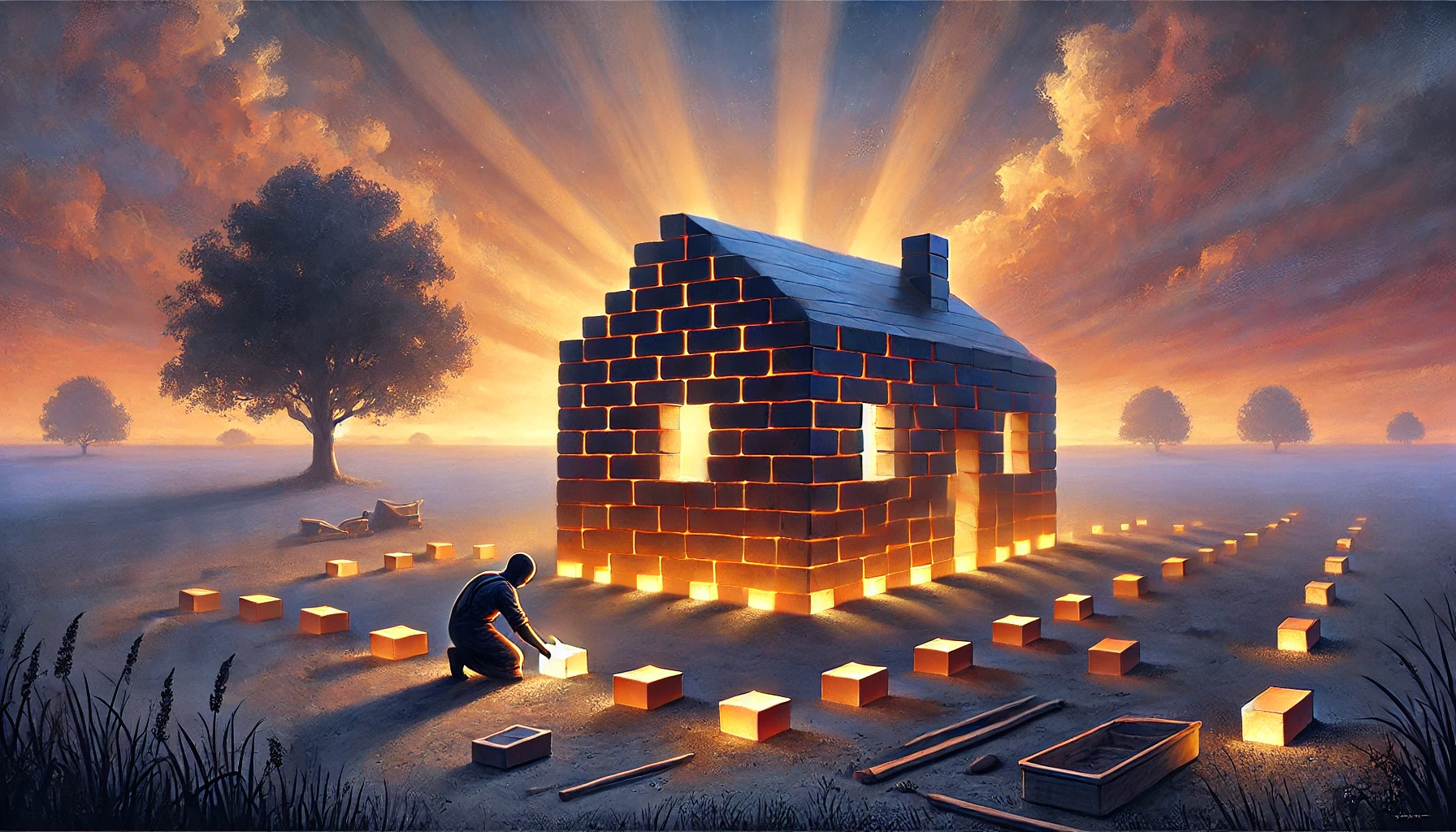
That we can show up fully when the stakes are high and coast when they are not. Life does not work that way. You don’t get to choose which bricks count. They all do.
Your professional life becomes the echo of how you treat the unglamorous work. Your relationships become the sum of your tone, your patience, your presence on ordinary days. Your health becomes the byproduct of the choices you make when motivation is low and excuses are plentiful.
None of this is dramatic. That is the point. The most consequential work of a life rarely announces itself. It happens in quiet repetitions. In the discipline of care. In the refusal to rush what deserves respect.
I think often about intentionality, depth, and consistency, not as abstract ideals, but as daily practices. Intentionality asks, why am I doing this, and who am I becoming while I do it? Depth asks, am I engaging fully, or just performing competence? Consistency asks, am I the same person on a random Tuesday as I am on the day it really counts?
Values, if we really understand it, are not statements we publish. They are behaviors we repeat.
I would contend that there is a reason this carpenter story resonates across cultures and contexts. We all recognize ourselves in it. We all know what it feels like to mentally leave early. To treat today as a placeholder for tomorrow. To assume we will care more later.
Later is rarely when things are built well.
The quiet opportunity in this story is not guilt. It is agency. If every day sees a brick being laid, then every day also offers a choice. You can slow down where you have been rushing. You can repair where you have been careless. You can bring pride back into places you have started to neglect.
You don’t need a life overhaul to change the house you are building. You need awareness. You need presence. You need the humility to take the small things seriously again.
The question is not what grand structure you want to live in someday.
The question is simpler, and harder.
How are you showing up today, in the work you think no one will remember?
Because one day, when tired with the search for your desired destination, you will look around. And you will realize you’ve been home all along.