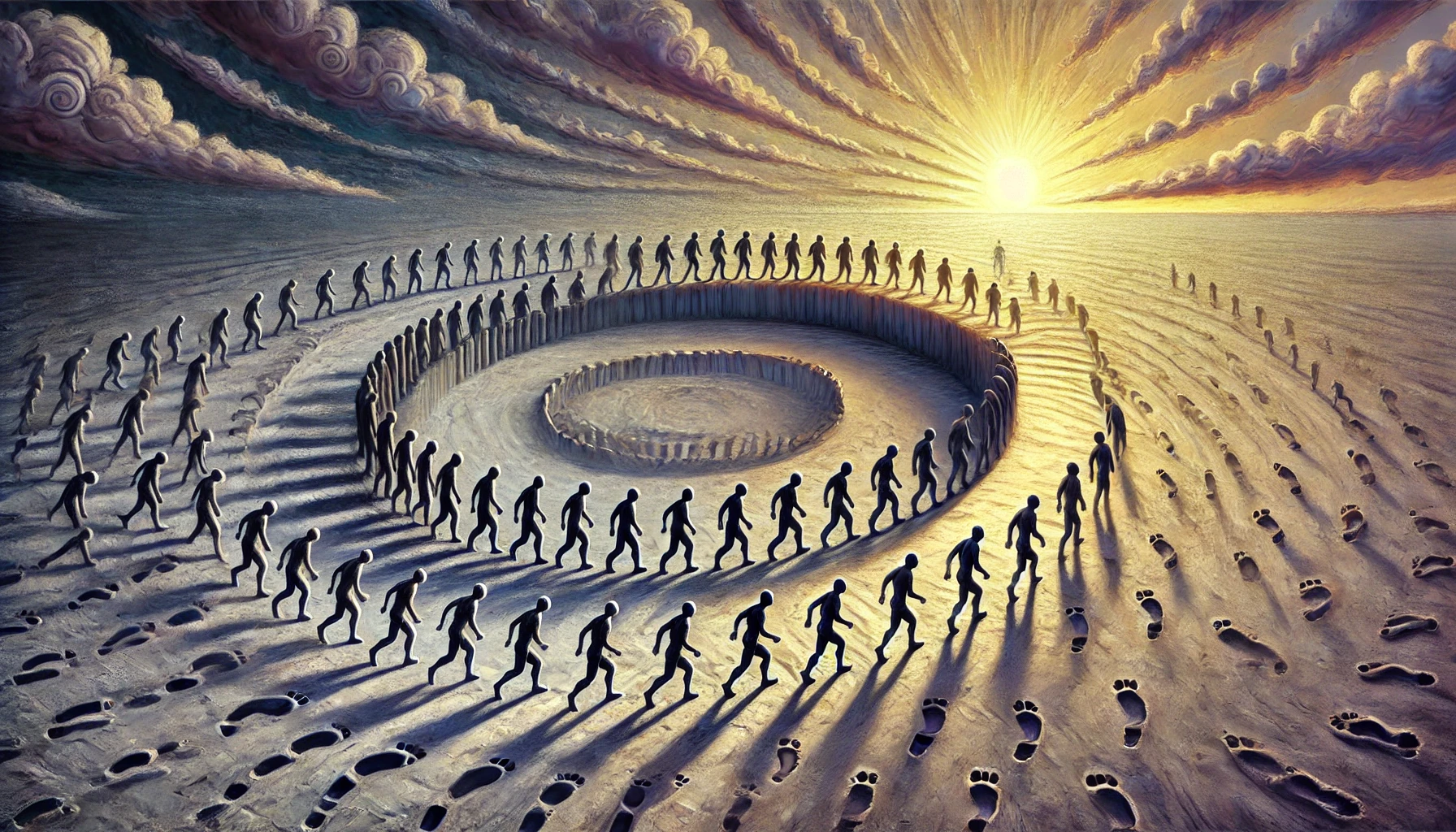
Most of what we do in life is not the result of conscious choice.
It is not because we have carefully thought it through, weighed the alternatives, or acted with deliberate conviction. It is simply habit. The way we tie our shoes, the way we check our phones, the way we respond in meetings, even the way we speak to the people we love. Our days are stitched together less by intention than by repetition, and over time, those repetitions become the invisible scaffolding of our lives.
This is not inherently bad.
Habits save us energy, free our minds from endless small decisions, and allow us to focus on bigger challenges. But the danger lies in the ease with which habits take over, quietly dictating our actions and reactions without our noticing. Mistakes, both small and large, often arise not from malice or incompetence, but from this unconscious autopilot. We act without really being present. We choose without really choosing.
I find myself having this conversation most often with myself, and with those closest to me. Why do we not question our habits? Why do we not pause before we act and ask: is this something I am doing out of purpose, or is this just the easiest path because it is familiar? It is a simple test, but a hard one to pass, because the few good results that habits deliver are enough to keep us tethered to them. A familiar comfort keeps us loyal, even when it quietly costs us growth.
The psychologists call it the habit loop: cue, routine, reward. A trigger sets us off, we act in the way we always have, and a small reward reinforces the cycle. What is fascinating is that the brain does not care much about whether the outcome is actually good or bad in the long run. It only cares about the predictability of the loop. The quick hit of reassurance after a familiar action is enough. And so, even when we fail, we tend to forget the pain and remember the occasional success. It is why gamblers keep returning to casinos, why professionals cling to outdated processes, why leaders fall back on management styles that no longer work, and why so many of us live inside routines we never chose.
The real challenge is to break this trance of the familiar. To bring consciousness back into what we do. Aristotle once said that excellence is not an act but a habit, and while that is true, it is worth remembering that not all habits are excellent. Some corrode our character and corral our possibilities. To live well, to lead well, to work well, we must decide which habits deserve our loyalty and which must be dismantled.
This does not mean rejecting habit altogether. It means interrogating it. It means building new routines with intention, choosing practices that serve our values rather than undermine them. Athletes understand this better than most. The hours of deliberate practice are nothing more than chosen habits, repeated with awareness until excellence becomes second nature. Leaders too must cultivate this same discipline. The instinct to pause, to ask why, to question the reflex, is not a weakness but a strength.
The irony is that habit is both the problem and the solution.
The very mechanism that locks us into unconscious loops can also be trained to build conscious ones. If we can make reflection a habit, questioning a habit, presence a habit, then we begin to rewrite the loops that govern our lives. Small conscious choices, made consistently, are far more transformative than the rare bursts of inspiration we wait for but seldom act on.
I often remind myself that the measure of growth is not in the grand moments of clarity, but in the quiet interruptions of autopilot. It is in choosing, again and again, to be awake to what we are doing. The seduction of habit is strong, but so is the power of intention. The question is simple and it is always available to us: is this action born of habit, or is it born of choice?
How we answer will, over time, decide not just what we do, but who we become.