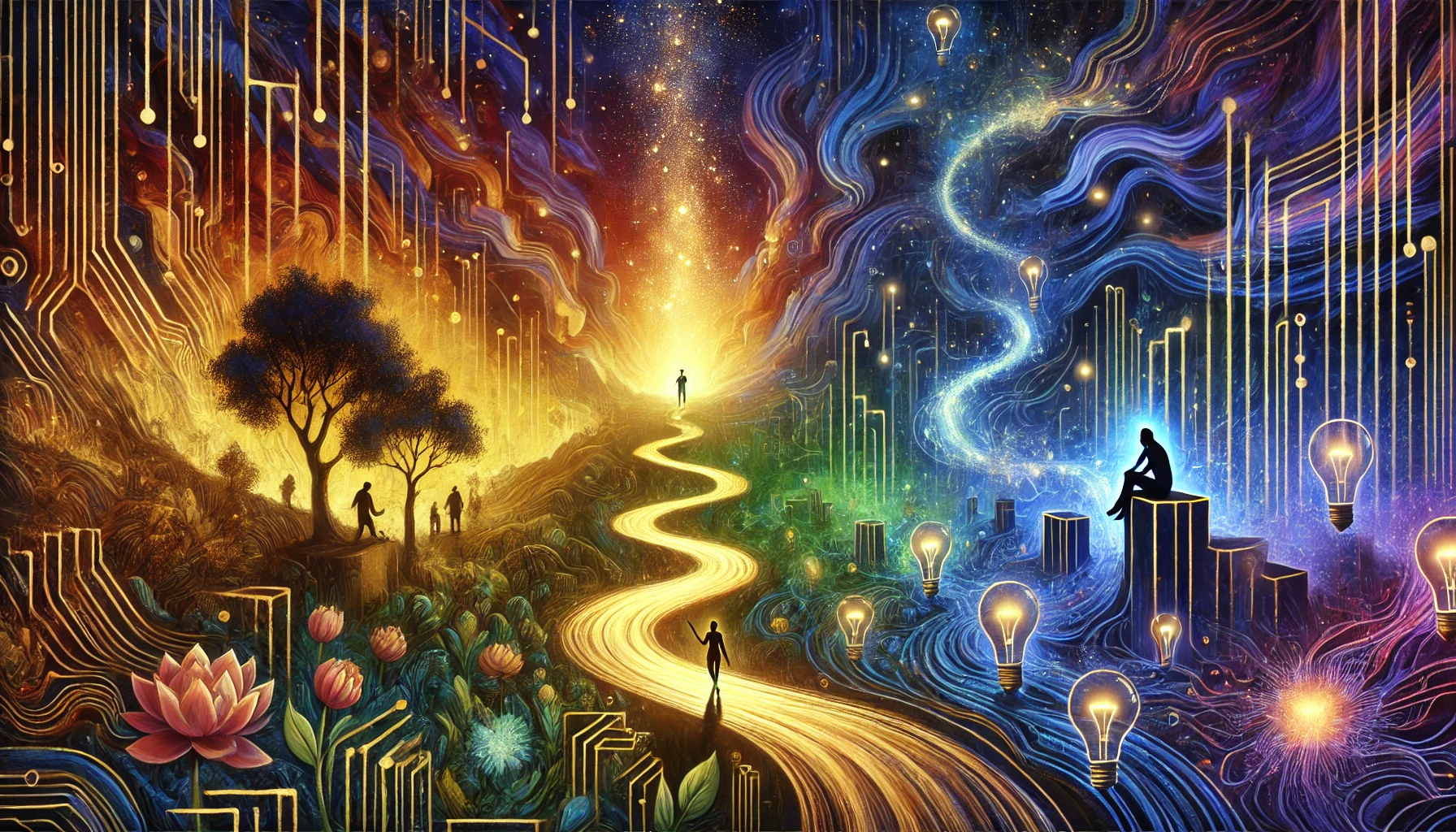
In a recent reflection, I wrote about how our ambition seems to have quietly shifted from chasing the impossible to chasing attention.
How so many today are “building with their backs to the future, shaping their efforts for today’s applause instead of tomorrow’s legacy.” That piece focused on the human side – the creators and the consumers caught in this endless loop of performance and validation.
But there’s another side to this story. One that deserves just as much attention, if not more. Because behind every reel, every viral post, every five-second dopamine hit, sits an infrastructure meticulously designed to keep us hooked. This isn’t just about human behavior. It’s about engineered behavior. It’s about systems built not for progress, but for profit. Platforms that could have been vehicles of innovation have become vending machines of distraction.
The uncomfortable truth is this: the attention economy didn’t happen by accident. It was built. Brick by brick. Line of code by line of code. Not by teenagers chasing trends, but by some of the most sophisticated engineers, product managers, and behavioral scientists in the world. Backed by billions in venture capital and public markets, these platforms were optimized to harvest time, not elevate thought. They promised connection, but engineered compulsion. They spoke of empowerment, but built dependencies.
Innovation, for all its potential, has been corralled into the margins. We are awash in capital, talent, and tools. We have machine learning that can predict, data pipelines that can personalize, infrastructures that can scale globally in seconds. But look where all that horsepower is being applied: to keep you watching just a little bit longer. To reduce friction between your impulse and your purchase. To feed you just enough outrage to keep you coming back, but not enough clarity to help you act.
Some of the brightest minds of our generation are working to shave milliseconds off video loading times – not to advance science, or cure disease, or solve the climate crisis – but to ensure you don’t bounce before the next ad.
This is not a condemnation of technology. Technology is neutral. It is, at its core, a tool. But tools take on meaning through their use. And right now, the tools of our age are being wielded less like instruments of discovery and more like slot machines in a digital casino. The payout? Not coins, but moments of your attention, harvested and sold in bulk.
It’s hard to blame the individual developer or designer. The pressure is systemic. Incentives shape outcomes. When engagement metrics determine valuations and virality feeds revenue, building ethical, mindful, or even meaningful features becomes an uphill battle. Crafting something slow, complex, or transformative rarely makes the sprint planning meeting. Ideas that require thought don’t convert as quickly. And so, they are deprioritized. Deferred. Discarded.
And while we were busy scrolling, something subtle but significant happened: platforms stopped being tools for expression and became environments for behavior. They shape how we think, what we notice, what we believe is important. They flatten our emotional range, accelerate our outrage, and dull our capacity for curiosity. They become the default context in which entire generations form their sense of self and the world.
What’s tragic is not just what’s being built, but what’s being left unbuilt.
Imagine if the same algorithmic power used to nudge you toward impulsive shopping could nudge you toward sustained learning. Imagine if our platforms measured depth of understanding instead of time on page. Imagine if the brightest minds in tech weren’t optimizing for ad impressions, but for collective imagination.
We talk a lot about innovation. It’s one of the most overused words in boardrooms and pitch decks alike. But real innovation is not faster checkout or better content moderation. Real innovation is moral. It is ambitious. It is inconvenient. It requires us to build what the world needs, not just what the market rewards. And in that light, most of our platforms are not innovative – they are, in fact, profoundly conservative. They reinforce what already exists. They amplify what already works. They optimize what already engages. And in doing so, they quietly crowd out the space for something truly new.
The most urgent questions of our time – from inequality to climate collapse to mental health – require coordinated effort, patient work, and long attention spans. These are the very things our current digital ecosystems devalue. So even when we have the means, we struggle to muster the collective will. We are exhausted by noise. Addicted to immediacy. And increasingly skeptical of anything that doesn’t go viral.
We need a different conversation. One that asks not just what tech can do, but what it should do. One that doesn’t treat platform engagement as success, but asks whether these platforms are elevating human life, or merely monetizing its most vulnerable edges. One that questions the logic of infinite scale when our attention, our well-being, and our planet are all profoundly finite.
We were promised a future where technology would free us – to create, to connect, to imagine. And in many ways, it still can. But we must demand more from the platforms we use, and from those who build them. We must rebuild the conditions for deep work, bold thinking, and long-term progress.
Because we cannot build for the stars if the best minds of our time are trapped in the gravity of the scroll.