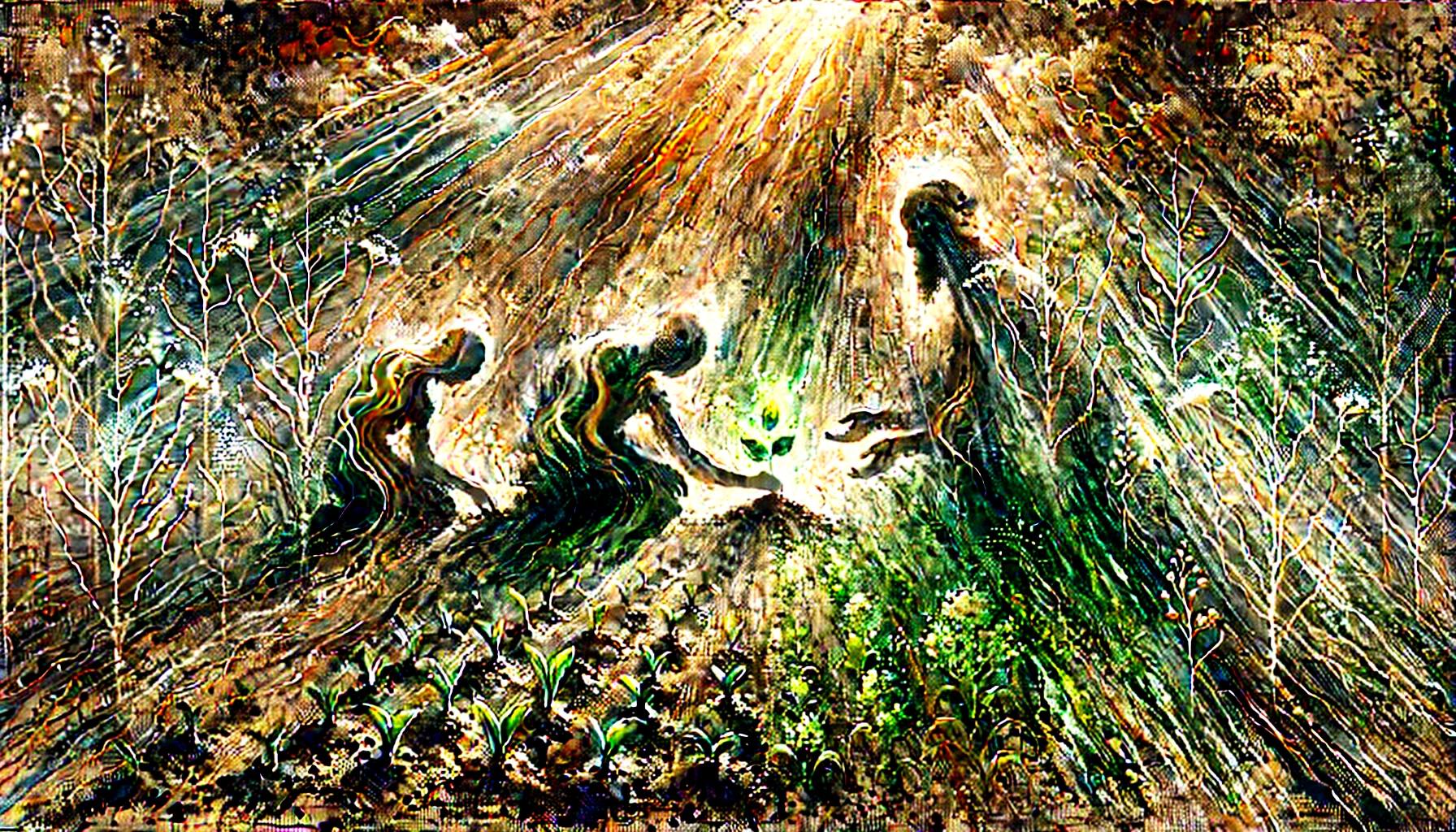
There is no substitute for working with your own two hands.
Today, I spent the entire day in my backyard with my sister and mother. We put down new perennials, weeded the flower beds, added manure, split plants, moved others, and tidied up the space while tending to our little vegetable patch. Seven hours, give or take, on our knees – in the dirt, in the sun, in the thick of a quiet kind of joy. It was the kind of work that leaves your back sore and your spirit full. And in a way I can’t fully explain, it felt like more than just gardening.
It felt like remembering something we never actually lived, but somehow still know.
Both our parents spent much of their childhoods in rural settings – around crops and orchards, animals and fields. They grew up where work meant your body moved, where time followed seasons, not screens, and where hands weren’t idle. My sister and I were born in a city, raised on concrete and in apartment buildings, with no daily chores that involved cattle or crops. But our grandparents – all four of them – came from villages across Punjab – where the land didn’t just support life, it defined it. The backyard is, strangely, our only thread to that past. It facilitates for us a quiet, persistent ritual that lets us reach for something deeper than nostalgia.
Something like belonging.
And maybe that’s why it feels so good. Not just because it’s outside or unplugged, but because the hands remember what the mind never learnt. Because somewhere in our cells lives the memory of tending, growing, touching, and toiling – not for novelty, but for sustenance. There is something profoundly grounding about the act of doing, especially when it involves the earth. The soil doesn’t ask for credentials. The weeds don’t wait, they dont care what your calendar looks like. You just have to show up, and do. And in doing, I believe, you come home to yourself.
That’s the part, I would contend, that technology hasn’t still figured out how to replicate. You can digitize tasks, optimize workflows, and automate almost everything – but you can’t fake the satisfaction of loosening stubborn roots or discovering the first little green shoot poking through. You can’t outsource the feeling of making something better with your own two hands.
This isn’t about gardening. It’s not even about manual labor. It’s about participation. The act of being fully in something. Whether you’re kneading dough, writing code, fixing a broken latch, painting a wall, or sketching a new idea – your hands bring you closer to the work, and the work brings you closer to yourself. It’s where thought becomes action, and action becomes meaning.
We live in a time where it’s easy to feel removed from the source of things. We consume food someone else grew, live in homes someone else built, use tools someone else designed, and spend our days clicking on things someone else made. And while that’s not inherently wrong, it can make us forget what effort feels like. It can make us mistake ease for progress. But there’s a quiet clarity that returns when you do the thing yourself. You feel time differently. You start to understand rhythm. You pay attention to things you never noticed. You grow more patient with others, and maybe a little more patient with yourself too.
The hands don’t lie.
They don’t perform or posture. They do. And in doing, they teach you. They teach you humility – because pulling weeds is thankless and repetitive. They teach you perseverance – because some roots run deep. They teach you empathy – because once you’ve had to kneel for hours in the dirt, you look at the world around you with softer eyes.
It’s why I believe the best leaders, builders, creators, and caretakers are often the ones who never lose touch with the doing. The ones who still roll up their sleeves, who still remember what the work feels like. Not just how it’s supposed to be managed or measured, but what it means to wrestle with something real, and shape it with care.
There is wisdom in the self-designed, self-initiated, and self-managed work. Not theoretical wisdom, but lived, felt, tested wisdom – the kind you can’t get from a book or a podcast or a keynote. The kind that comes from staying with the task a little longer. From fixing what breaks. From making something grow. From showing up when it’s inconvenient. From being present enough to notice the subtle shift between before and after.
So no, there is no substitute for working with your own two hands. Not because it’s romantic. But because it’s real. Because it roots you to something older than you. Because it connects you to the people who came before you, and maybe even to the people you’re quietly becoming.
And when all is said and done, maybe that’s the work we’re really doing out there in the garden, or in the workshop, or wherever we choose to get our hands dirty. We’re not just tending to plants or fixing things. We’re remembering. We’re reconnecting. We’re reminding ourselves that meaning doesn’t live in the outcome.
It lives in the doing.