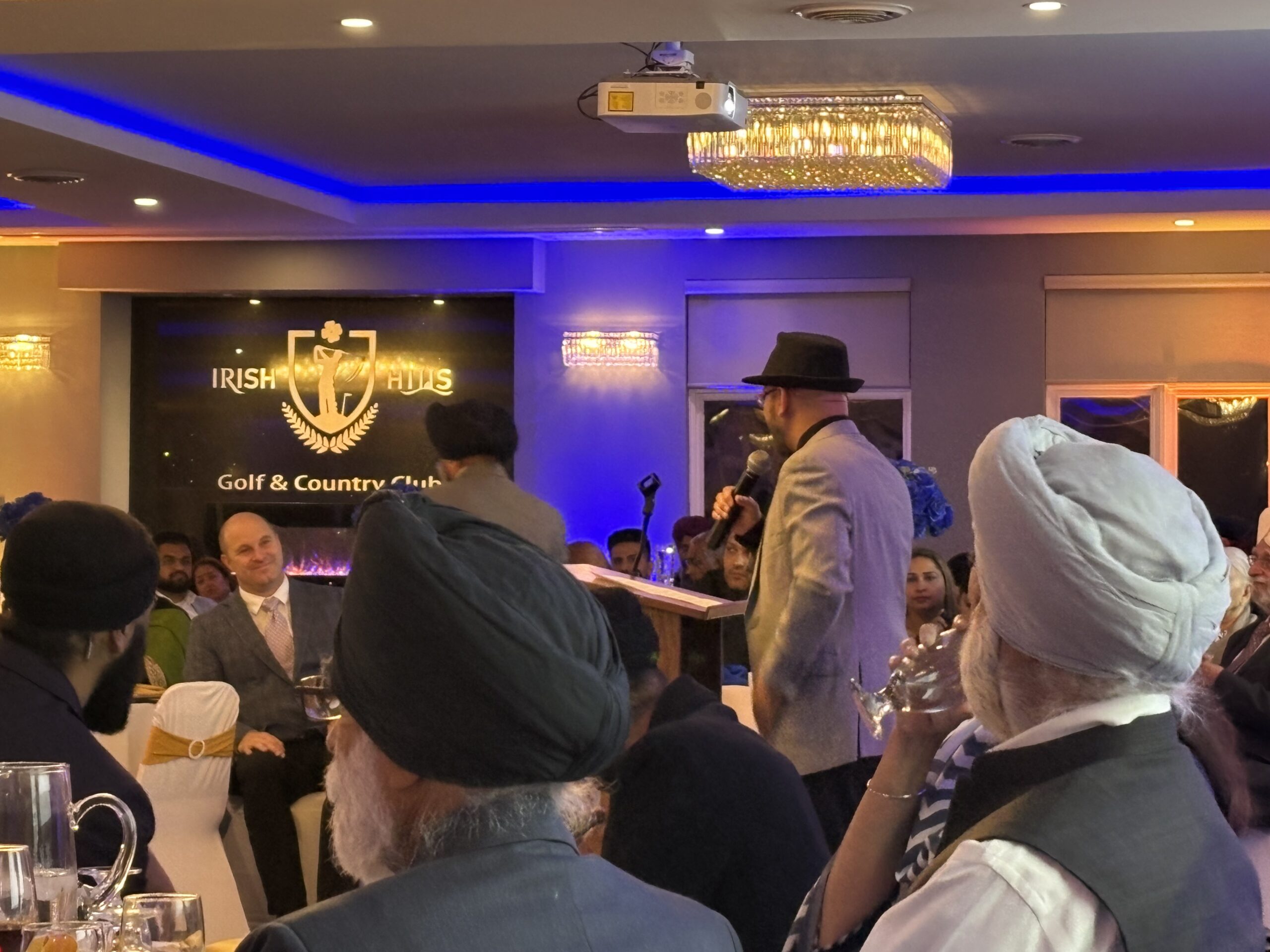
Earlier tonight, I found myself at the Irish Hills Golf and Country Club, surrounded by familiar faces and a shared sense of purpose.
It was a fundraiser to support the rebuilding efforts in Punjab after the devastating floods earlier this year. But it was more than an evening of giving. It was an evening of remembering – of remembering where we come from, what binds us together, and what it truly means to belong to something larger than ourselves.
In the comfort of our homes, far from the lands that shaped us, it’s easy to let distance dilute empathy. We scroll through newsfeeds, pause for a moment, sigh, and move on. But the evening reminded me how dangerous that comfort can be – how easy it is to confuse awareness with engagement, or sympathy with service. For a few hours, as the community gathered with quiet resolve, we felt what it truly means to care not just as individuals, but as a collective.
Throughout the night, many voices rose – each different in tone, but united in truth. They spoke of loss and resilience, of the vastness of what was destroyed and the courage of those who continue to rebuild. There was no theatrics, no performance, no posturing – just sincerity. Each reflection carried the same quiet conviction that while the floods had submerged land and homes, they could not wash away spirit. And woven through those words was a profound reminder that to be Punjabi is not only to endure, but to stand together, to rebuild together, and to serve with humility and heart.
That is what stayed with me: the idea that service is not an act of generosity, but an act of identity. Seva, in its truest form, is not about charity; it is about character. It is not about what we give, but about who we choose to be while giving. And that idea sits at the very core of how I understand leadership.
Authentic transformational leadership, to me, is not about authority or influence; it is about presence. It is about showing up when it matters, standing where it’s uncomfortable, and serving without expectation of return. It’s about enabling others to see possibility in the midst of despair and creating environments where compassion becomes a shared practice, not a passing sentiment. Leadership that serves is not measured by the number of followers it attracts, but by the number of people it uplifts.
The evening reminded me that humility is not the absence of ambition – it is its purification. True ambition is not about how high we climb, but how many hands we extend along the way. And last night, I saw ambition in its purest form: people quietly committing to a cause, not for recognition, but out of remembrance. There was a quiet grace in the air. A sense that the purpose was not to perform, but to participate.
When I think about Punjab – its soil, its spirit, its stubborn resilience – I think of a culture that has, time and again, turned adversity into endurance. It has taught the world what it means to feed others even when one’s own plate is empty. That resilience is not just a matter of survival; it is a reflection of service-oriented leadership at a collective scale. It is the embodiment of a community that leads not through words, but through unwavering action.
I am deeply grateful to Lakhwinder Bhaji and Jagdeep Bhaji for bringing us together with such humility and grace. There was no pressure to give, no expectation to perform. People contributed because they wanted to, not because they had to. That, to me, is the most beautiful form of leadership – the kind that invites participation rather than demands it, that leads through invitation rather than instruction.
The target for the evening was $60,000, and it was not only met but exceeded. Yet what stood out was not the number, but the spirit in which it was achieved. It was a reminder that generosity is not about the amount, but the intent. It’s about giving from a place of shared humanity, not surplus.
As I drove home with Raju Bhaji, I kept thinking about how leadership, in its truest form, is not about leading others from the front, but about standing beside them in service. Whether in organizations, communities, or nations, leadership that endures is leadership that serves. It is what connects us across geography and generation.
The truth is, we don’t need to be in Punjab to stay with Punjab. We stay with it when we keep our hearts open, our intentions clear, and our actions consistent. We stay with it when we refuse to let empathy fade after the news cycle ends. We stay with it when we recognize that rebuilding is not a one-time effort, but a long, patient act of care.
The evening was more than a fundraiser.
It was a living expression of what it means to lead through service, to care with consistency, and to remember with purpose. It reminded me that home is not always a place – sometimes it is a feeling, a shared act, a promise renewed.
And perhaps that is what leadership truly is.
The courage to remember. The humility to serve. The grace to keep showing up – again and again – when the heart remembers home.