Most days don’t fall apart because we don’t work hard.
They fall apart because we don’t work right. We pour energy into things that are loud but meaningless, urgent but inconsequential. And somewhere in the middle of meetings and messages and multitasking, the stuff that actually matters – the work that moves the needle – gets buried under a pile of artificial urgency.
I wrote recently about how most people spend their best hours reacting to other people’s priorities, and by evening they wonder why their own made no progress. Because let’s face it, we don’t usually lack effort. We lack clarity. We don’t need more time. We need better decisions.
And that’s why I love the simplicity of the Eisenhower Matrix.
It’s an old idea, popularized by President Dwight D. Eisenhower, who said:
“What is important is seldom urgent, and what is urgent is seldom important.”
That single sentence, in my humble opinion, captures the daily dilemma of our modern life. We confuse the ping of urgency with the pull of importance. We jump to the task that screams the loudest instead of honoring the work that matters the most.
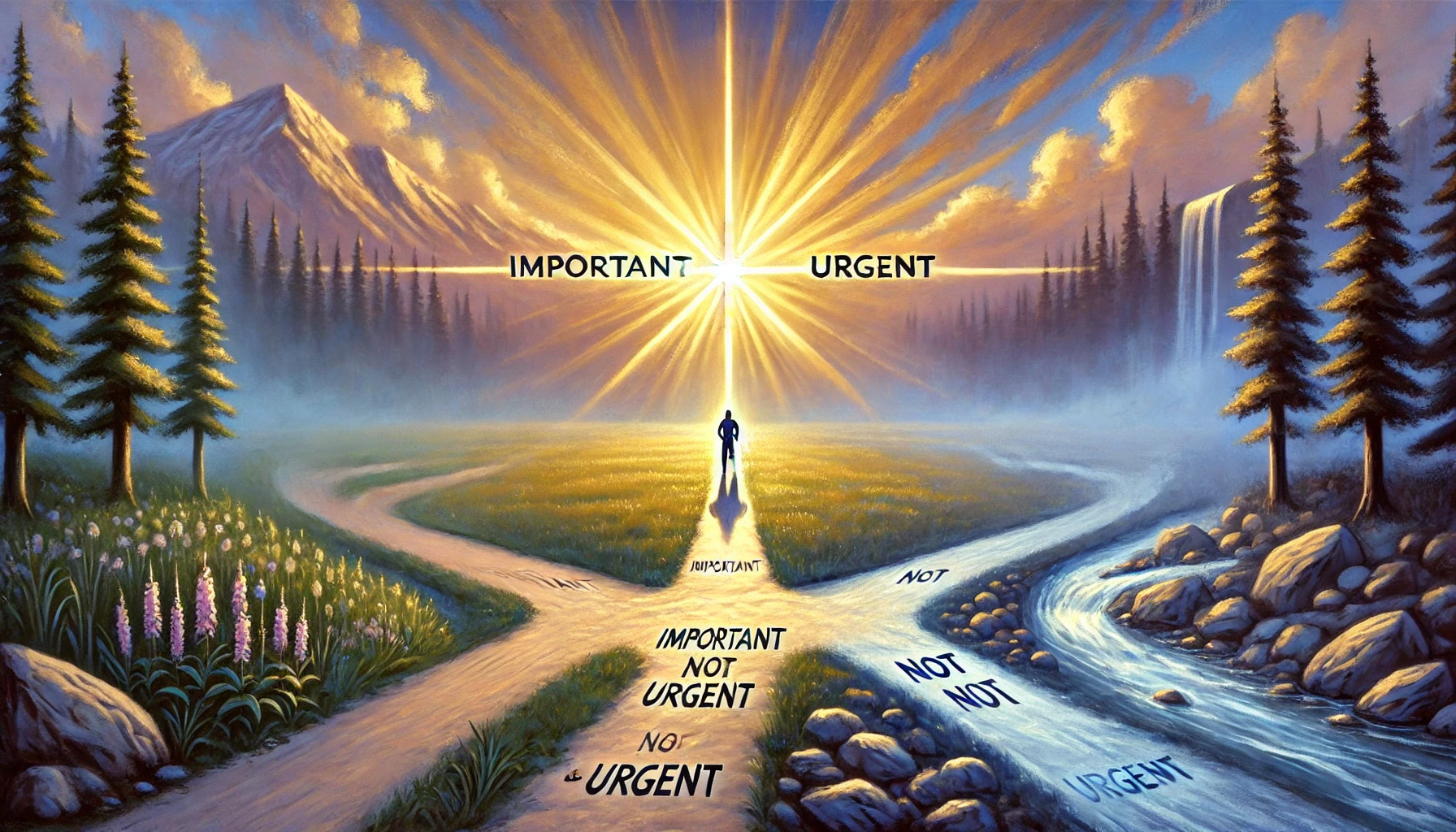
The matrix he inspired is refreshingly straightforward. Two axes – Urgent vs. Important – split your tasks into four quadrants:
- Important and Urgent: Do it now.
- Important but Not Urgent: Schedule it.
- Not Important but Urgent: Delegate it.
- Not Important and Not Urgent: Eliminate it.
That’s it. No complicated software. No elaborate framework. Just a moment of honesty with yourself: Is this really important? Or does it just feel urgent because someone else said so?
And here’s the power of it – it forces you to pause. It asks you to do something we rarely do: think before acting. That’s what makes it so useful. It rescues us from the tyranny of reaction.
Stephen Covey, who helped mainstream the matrix, put it beautifully:
“The key is not to prioritize what’s on your schedule, but to schedule your priorities.”
In other words, don’t let your calendar become your compass. Let your values decide what gets your time. That’s the spirit of the second quadrant – important but not urgent – which is, in many ways, where all real growth lives. Strategy. Planning. Relationships. Learning. Creative work. The deep stuff we keep postponing because we’re “too busy.”
But busy with what?
The matrix gives us permission to let go of that which should not be done at all. It’s a reminder that not every task is yours to carry. Some things can be delegated without guilt. Some things can be delayed without consequence. And some things can be deleted entirely.
And here’s what I’ve come to learn over the years – being clear on what matters doesn’t make life easier. But it makes it lighter. You stop carrying everyone else’s fires. You stop pretending that everything deserves your attention. You stop trying to outrun your day.
You start designing it.
That’s why I keep coming back to the matrix – not as a productivity hack, but as a daily discipline. A conversation with myself. A chance to ask: Is this mine? Is this now? Is this necessary?
It’s not magic. But it’s honest. And sometimes, that’s enough.
So tomorrow, before the noise starts, try it. Draw the four boxes. Put your tasks in them. Be ruthless. Be kind. Be clear.
And then begin your day with what matters most. Not what’s screaming. Not what’s shiny. But what’s yours.